

You are good at your job. You deliver results, work hard and believe that strong performance should speak for itself. Then one day, someone with less experience gets the promotion, project or opportunity you wanted. Suddenly, you are left wondering: How did that happen? Welcome to office politics at work....

5 Signs You’re the Manager Everyone Wants to Quit: And How to Fix It Before They Do
Good managers want employees to trust them. But trust goes beyond being liked or respected. It shows up when employees feel comfortable sharing ideas, admitting mistakes, disagreeing, and raising problems before they become crises. Certain management habits can quietly weaken that trust, often without the manager realizing it. Over time,...

Why Good Leaders Misread Their Teams: The Signals Leaders Often Miss
It is 10:12 in the morning. Six people are sitting around a table reviewing a proposed process change. One person is speaking. Two are nodding. Another is checking the clock. Meanwhile, the employee who understands the process better than anyone else has not said a word. The leader finishes explaining...

Why Good Leaders Accidentally Pass Pressure to Their Teams: The Hidden Cycle of Pressure Transfer
Every leader faces pressure. A customer expects an immediate answer. A shipment is delayed. Equipment breaks down. Production falls behind schedule. Deadlines become tighter, and expectations continue to grow. Pressure is part of leadership. What many leaders fail to recognize, however, is that pressure rarely stays where it begins. Imagine...
Workplace Conflict Resolution for Manufacturing Leaders: Avoiding Fake Harmony
Conflict is an inevitable part of leadership. Whether you oversee a production line, manage multiple shifts, or lead cross-functional teams, disagreements are bound to happen. The instinct for many leaders is to resolve conflict as quickly as possible so everyone can get back to work. Unfortunately, that instinct often creates...
Building High-Performance Teams: Why Shared Definitions Matter
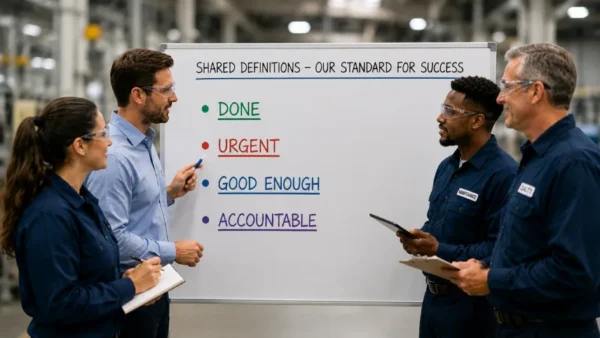
Building high-performance teams is one of the greatest challenges leaders face. Organizations invest significant time and money into leadership development, communication training, process improvements, and performance management. Yet many teams continue to experience the same frustrations. Projects fall behind schedule. At the same time, departments begin blaming one another. As...

Difficult Boss: Understanding the 3 Types and How to Handle Them
A difficult boss can significantly impact employee engagement, workplace performance, and career growth. Many professionals believe the solution is to work harder, stay quiet, or simply wait for the situation to improve. However, these approaches rarely solve the problem. Instead, learning how to deal with a difficult boss starts with...

Why Repeating Yourself as a Leader Signals a Systems Problem
Leaders often assume that effective leadership communication systems simply require repeating the message more often. The same meeting reminders continue showing up week after week. The performance expectation gets emphasized again. The same priorities are revisited. But repetition usually signals a deeper systems problem. When leaders constantly revisit the same...

When Communication Fails: The Leadership Cost of Assumptions
One of the most common communication breakdowns in leadership is the assumption that what was said is what was heard. Leaders often believe they have communicated clearly because the message made sense in their own mind. Yet team members interpret conversations through their own experiences, workload pressures, priorities, and assumptions....

Clear Agreements Make Accountability Easier
Accountability struggles often have less to do with motivation and more to do with clarity. When expectations are vague, people naturally fill in the gaps with their own assumptions. One person believes a task is urgent. Another assumes it can wait until next week. One team member thinks they own...